Been meaning to do this for a while and finally set some time aside to lay out a very brief primer on muscle gain nutrition. This will be part of a longer series on diet strategies, but I figured I’d start with a very basic approach on what to do to BUILD muscle with nutrition. I won’t mention training here but expect that to come soon.
When it comes to nutrition planning and muscle gain, you have three available strategies, each with their own trade-offs when it comes to effectiveness, timeline, and parallel fat gain.

STRATEGY 1 - Aggressive Bulk / Cut Cycle
Benefit: Muscle gain is almost guaranteed to be maximized (assuming solid training).
Negative: Fat gain is also aggressive, which requires an aggressive cut to balance out.
Gleaned from historical examples in bodybuilding, a common method for gaining the most possible muscle mass in the off-season was a pure and nearly unrestricted calorie intake. In practice, the mass consumption of calories would lead to appreciable gains in muscle to support and recover from hard training. The obvious tag-along effect of copious fat gain was an acceptable trade-off as there would be an equally aggressive window of ‘cutting’. During these cuts, the diet would be severe and the training would be done in a means to hold on to as much muscle as possible in the prolonged deficit. In terms of muscle gain effectiveness, it certainly guarantees the resources are available, but it also comes with a window where you will be putting on uncomfortable and unsightly amounts of fat. This approach suits a certain psychology and isn’t cut out for everyone, especially if you’re just a recreational lifter. Additionally, this entire strategy gets obfuscated by the drug-use in professional bodybuilding which alters the what is realistic for most people to achieve (both in the bulk and the cut).
In practice, the approach is very simple. Eat everything in sight with a heavy emphasis on protein and carbohydrates to support training. You will find insane recommendations from all corners of the web advocating everything from consuming candy bars on an hourly basis to gorging yourself every other day with unlimited chicken wings. Within this paradigm, there is little that isn’t allowed. Overall, I wouldn’t suggest it as it’s mostly a cope for hedonism and a willing sacrifice of your long-term health. Whether you have the discipline to actually follow through with an aggressive cut is a big ask.
Guaranteed, you will get bigger and stronger.
STRATEGY 2 - The Lean Bulk
Benefit: Fat Gain can be minimized, resulting in a nicer physique all year round.
Negative: You probably wont gain muscle and you’ll be a neurotic weirdo.
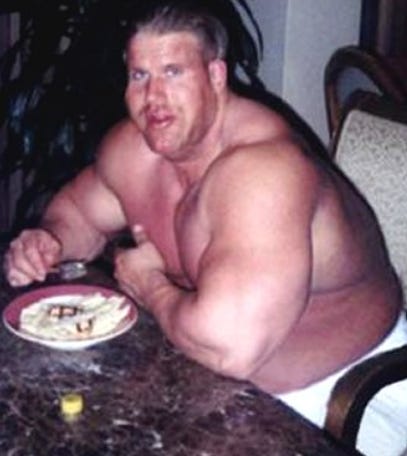
Made popular in recent times by the online fitness / biohacker space, a ‘Lean Gain’ approach is wide range of various strategies to gain muscle at a rate that minimizes the parallel fat-gain. You’ll see various strategies advocated for that discuss carbohydrate timing, fasting days, feeding windows, and planned cheat meals. No matter which strategy you end up choosing, they all shake out to having mild to little effect in terms of muscle mass gain as opposed to holding a caloric surplus constant. These strategies are mostly popular due to their promises but rarely deliver when it comes to truly gaining muscle.
In all fairness, the advantage of lean-gaining is maintaining a great physique year-round, requiring little to no dieting for contests or sports. For models or those whose income depends on their physique, being photo-ready quickly can be financially beneficial, though this doesn’t apply to most lean-gaining advocates. However, if your goal is truly about getting a physique altering amount of muscle, refusing to gain any amount of fat will result in a failure to add anything significant.
The number of protocols that fall into this strategy is endless. Search any combination of “lean” and “bulk” and you’ll find something that is manipulating one or two variables over the week (usually carbs and feeding windows). They are going to have varying success to each individual but they are all better suited as paradigms that help you tolerate dieting in a deficit for longer. People have a natural reliance on carbohydrates and fats for the pleasure of eating, so these strategies lean into that but offer heuristics that give you one or two days of gluttony. In the end, the most important factor always ends up being surplus calories, enough protein to support growth, and putting more weight on the bar.
STRATEGY 3 - Slow Build / Reasonable Cut
Benefit: You’ll gain muscle and keep fat gain in a controllable level
Negative: Requires discipline to stay the course, planning your training and diet plan, humility to let yourself gain some fat, and having above room temperature IQ.
Assuming you want to keep fat gain to a minimum AND you actually want to add some muscle, I recommend a low and slow bulking window with a reasonably tolerable cut. Seemingly obvious, but it is a legitimate approach that is deserving of its own write up. The sad reality is that natural muscle gain is slow. On average, a male trainee optimizing training and nutrition can gain about 0.5 pounds of muscle per week (this would potentially be higher in novices up until they acquire sufficient training age). As trainees advance, this rate slows significantly: intermediates may gain only 1 pound per month, with even slower progress beyond that. Over a year, this translates to about 24-26 pounds of muscle primarily in the first year of training, with gains decreasing thereafter. These figures contrast sharply with exaggerated marketing claims or drug-enhanced results as demonstrated by professionals.
In practice, you would choose a window of time where strength and growth are built in by holding a modest surplus and restricting the diet for short windows of time to support some fat loss. The goal being to allow the goal of strength and mass to occur but never extending our time in that stage to the point of unreasonable fat gain. Conversely, staying too lean year-round limits muscle and strength gains due to insufficient calorie intake. To build sufficient muscle and not overload on fat gain, this strategy is superior to the other two options.
Here are practical guidelines for alternating muscle gain and fat loss phases:
Starting Body Fat: It is recommended that you start a muscle-gaining phase from a LEANER body fat (something like 10-15% body fat for males or ~19-24% for females). It’s not necessary but it helps give you more runway to gain weight and determine how much is fat compared to muscle. Fatter trainees should focus on fat loss with a recomposition plan first then shift to a muscle gain approach.
Post-Diet Stabilization: After dieting, spend two weeks at maintenance calories to normalize hormonal adaptations. this also allows you to get a sense of what REGULAR eating feels like and establish a baseline.
Weight Gain Rate: For beginners, aim for 1 lb/week weight gain for males (0.5 lb muscle, 0.5 lb fat), equating to ~4 lb/month, respectively. Faster gains (e.g., 2-3 lb/week) increase fat without boosting muscle growth. Research regularly confirms slower weight gain favors muscle over fat, while faster gains lead to excess fat.
Macro and Calorie Targets: Total calorie intake should be 10-20% above maintenance. Set your protein target at 1g of protein per 1 lb of bodyweight, this is sufficient to supporting growth and recovery. More MAY be reasonable but certainly not less. Set your fat intake to be roughly 15-20% total calories and have carbohydrates go to the rest.
Use this easy macro calculator if you want to take the guess work out.
End of Gaining Phase: Set yourself an upper limit and stop gaining when body fat reaches a specific target (in the ballpark of ~15%-20% for males). For example, a 170 lb male at 10% body fat could gain 16 lb (8 lb muscle, 8 lb fat) over 16 weeks at 1 lb/week.
Consolidation and Dieting: After gaining, stabilize for two weeks at maintenance calories, adding cardio if not already included. Then, diet to lose fat while preserving muscle.
Repeating the above cycle over several years will yield sufficient muscle gain, improve your overall physique, and support your long-term health. The most critical component is to thoroughly enjoy the process and remain incredibly disciplined. In the modern era, there are less and less people willing to undergo the long journey and are easily tempted to take shortcuts (drugs) or lack the courage to never take the journey at all (get fat).
Originally published on Substack.
Defined by discipline and action. Learn more about the mentality behind the movement.